Peptide Therapy in Miami: What BPC-157, GHK-Cu & 'Research Peptides' Really Mean
Peptide therapy is everywhere in Miami — but which peptides are actually evidence-based? An honest provider's guide to BPC-157, GHK-Cu, and safer options.
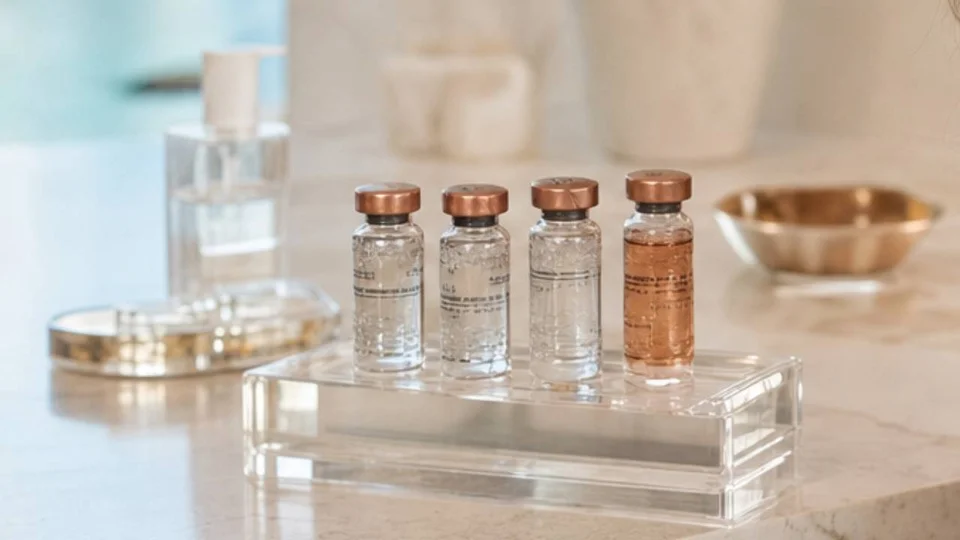
Walk into almost any conversation about longevity in Miami right now — a Kendall gym, a Coral Gables wellness circle, a scroll through your feed — and you’ll hear about peptides. BPC-157 for recovery. GHK-Cu for skin and hair. TB-500 for “healing.” The marketing is confident, the before-and-afters are glossy, and the promises are big.
Here’s the honest version, from a provider’s perspective: “peptide therapy” is not one thing. Some peptides are among the most rigorously studied medications in modern medicine. Others are sold as “research chemicals,” have almost no human safety data, and sit in a regulatory gray zone. Lumping them together is how people end up spending money on something they don’t understand — or injecting something they shouldn’t.
This guide separates the two. We’ll explain what peptides actually are, give you a clear-eyed look at the “research peptides” everyone is asking about, and show you which evidence-based, peptide-adjacent options are genuinely available at a boutique medical practice in Miami.
What “peptide therapy” actually means
A peptide is simply a short chain of amino acids — the same building blocks that make up proteins, just smaller. Your body makes thousands of them, and they act like messengers: telling cells to build collagen, regulate appetite, manage inflammation, or repair tissue.
Because “peptide” is such a broad category, the term “peptide therapy” covers wildly different things:
- FDA-approved peptide medications. The GLP-1 medications for weight management — semaglutide and tirzepatide — are peptide-based drugs backed by large clinical trials. So are many peptide hormones used in mainstream medicine.
- Naturally occurring peptides used clinically. Glutathione, for example, is a tripeptide (three amino acids) and one of the body’s key antioxidants. It’s used in wellness injection menus for skin clarity and antioxidant support.
- Unapproved “research peptides.” This is where BPC-157, GHK-Cu (in injectable form), TB-500, and CJC-1295 live. They’re often sold online labeled “for research use only, not for human consumption” — a phrase that should give you pause.
The problem isn’t the word “peptide.” The problem is that clever marketing borrows the credibility of the approved, well-studied peptides and applies it to the unapproved ones. So let’s look honestly at the ones driving the trend.
The “research peptides” everyone’s asking about
BPC-157
BPC-157 is a synthetic peptide promoted for tendon, gut, and soft-tissue healing. Online, it’s presented as a near-miracle recovery aid. In reality, almost all of the supporting evidence comes from animal studies — rats, not people. There are no large, high-quality human trials establishing that injectable BPC-157 is safe or effective for the uses it’s marketed for.
Its regulatory history reflects that uncertainty. The U.S. FDA previously flagged BPC-157 as a bulk drug substance with significant safety concerns, citing limited human safety data and manufacturing/purity risks. In 2026 the FDA removed BPC-157 from that specific restricted category, but — and this matters — it is still not FDA-approved, has no recognized pharmacopeia monograph, and remains in a gray zone rather than an approved-for-use column. It’s also on the World Anti-Doping Agency’s prohibited list, which is why athletes are warned away from it.
GHK-Cu (copper peptide)
GHK-Cu is more nuanced, because the delivery method changes everything.
- Topical GHK-Cu — the copper peptide in many serums — is widely recognized as a safe cosmetic ingredient, with research supporting improvements in skin texture, firmness, and the appearance of fine lines over weeks of consistent use. This is legitimate skincare science.
- Injectable GHK-Cu is a different conversation. It is not FDA-approved for systemic use, the human evidence is thin, and copper delivered throughout the body carries more risk than a serum applied to the skin. It may be inappropriate for anyone with a copper-metabolism disorder such as Wilson’s disease.
TB-500, CJC-1295, and the rest
The same pattern repeats: promising-sounding mechanisms, heavy social-media marketing, and a serious shortage of human safety data — often paired with sourcing from unregulated suppliers where you genuinely don’t know what’s in the vial.
Where SkinUp stands
Let’s be direct: SkinUp does not offer BPC-157, TB-500, or other unapproved “research peptide” injections. That’s a deliberate choice, and it’s the same philosophy that guides everything we do.
Our approach has always been natural results guided by medical judgment — not chasing whatever is trending. When the human safety data isn’t there, when a product is labeled “not for human use,” and when purity can’t be guaranteed by a regulated pharmacy chain, “everyone’s doing it in Miami” is not a good enough reason to inject it into a patient. Thoughtful care sometimes means recommending against something.
That doesn’t mean we ignore the real interest behind the peptide trend. People are drawn to it because they want the same things we care about: better recovery, healthier skin, more energy, and aging with intention. The good news is that several of those goals are served by peptides and regenerative treatments with a real evidence base — the ones we’re comfortable standing behind.
The evidence-based, peptide-adjacent options we do offer in Miami
GLP-1 peptide medications for weight management
If you want a peptide therapy with genuine clinical backing, this is it. Semaglutide and tirzepatide are peptide-based GLP-1 medications — semaglutide (Ozempic/Wegovy) targets the GLP-1 receptor, while tirzepatide (Mounjaro/Zepbound) is a dual GLP-1/GIP agonist. At SkinUp, they’re delivered through a provider-guided program with evaluation, monitoring, and follow-up — used only when clinically appropriate. If you’re weighing candidacy, our tirzepatide candidate guide breaks down who these medications tend to suit.
Glutathione — a peptide you can actually get
Glutathione is a naturally occurring tripeptide and a master antioxidant. We offer it as an intramuscular injection within our vitamin and wellness injection menu, often chosen for skin clarity and antioxidant support. It’s a good example of a peptide with an established place in wellness care.
Regenerative treatments that use your own growth factors
For the “recovery and skin renewal” goals that draw people to research peptides, we lean on regenerative treatments that work with your biology instead of introducing unapproved compounds:
- PRP (platelet-rich plasma) concentrates the growth factors from your own blood to support skin and hair.
- EZ-Gel and PRF take that concept further, using a fully natural, additive-free preparation from your own blood. Our PRP vs. PRF vs. EZ-Gel guide explains the differences.
- Collagen biostimulators like Sculptra prompt your body to build its own collagen over time — regeneration, not filler.
Because these treatments use your own biological material, they remove the sourcing and contamination worries that come with research peptides bought from unregulated suppliers. To be transparent, PRP, PRF, and EZ-Gel aren’t FDA-approved for these aesthetic uses — PRF and EZ-Gel in particular operate in a regulatory gray area, while Sculptra is an FDA-approved biostimulator — but the risk profile is different when you’re working with your own blood under medical supervision rather than an unknown compound from an online vendor. As always, we’ll walk you through what’s established and what isn’t.
The broader wellness stack
Rounding out the picture, we also offer NAD+ injections, B12 and vitamin injections, and IV nutrient therapy. To be precise — NAD+ is a coenzyme and B12 is a vitamin, so these aren’t peptides — but they’re part of the same whole-patient wellness conversation, and they’re chosen based on your goals rather than treated as a generic add-on.
How to evaluate a “peptide therapy” offer in Miami
Peptides are being marketed aggressively across Kendall, Coral Gables, and greater Miami. Whether you’re considering SkinUp or anywhere else, these questions protect you:
- Is it FDA-approved, or a “research peptide”? Approved peptide medications (like GLP-1s) are dispensed through regulated pharmacy channels. If a product is labeled “for research use only,” that’s a red flag, not a technicality.
- Who is overseeing it? There’s a real difference between a provider-guided medical program with evaluation and monitoring and a walk-in “add-on shot” with no medical context.
- Where does the product come from? Regulated pharmacy sourcing matters. Vials from unregulated suppliers can be inconsistent or contaminated.
- What does the human evidence actually say? Animal studies and testimonials are not the same as human clinical data. Ask, and expect an honest answer.
- Does the recommendation fit you specifically? The right plan depends on your health history and goals — not on what’s trending this month.
If a provider can’t answer these calmly and clearly, that tells you something about how they practice.
The bottom line
Peptide therapy is a genuinely exciting area of medicine — and also one of the easiest to oversell. The most-hyped “research peptides,” BPC-157 and injectable GHK-Cu among them, simply don’t yet have the human safety and efficacy evidence, or the regulatory footing, to belong in responsible practice. At SkinUp, we’d rather tell you that honestly than sell you a syringe.
What we can offer is the evidence-based version of what you’re really after: GLP-1 peptide programs for weight, glutathione for antioxidant support, regenerative PRP/PRF/EZ-Gel that uses your own growth factors, and a wellness menu built around your goals. That’s peptide-era care done thoughtfully — refreshed, never overdone.
Frequently Asked Questions
Q: What is peptide therapy? A: It’s a broad term for using peptides — short chains of amino acids that act as signals in the body — to support goals like metabolism, skin quality, or recovery. The key is separating FDA-approved peptide medications (like the GLP-1s semaglutide and tirzepatide) from unapproved “research peptides” such as BPC-157 and injectable GHK-Cu, which have far less human evidence and an unsettled regulatory status.
Q: Does SkinUp offer BPC-157 or research-peptide injections? A: No. We don’t offer BPC-157, TB-500, or similar unapproved injections. They aren’t FDA-approved, human data is limited, and products sold outside a regulated pharmacy chain raise real purity concerns. Our approach is evidence-first.
Q: Are semaglutide and tirzepatide peptides? A: Yes — both are peptide-based GLP-1 medications and among the most studied peptide therapies available. They’re part of our provider-guided medical weight management program in Kendall, used only when clinically appropriate and with ongoing monitoring.
Q: Is GHK-Cu safe? A: Topical GHK-Cu is a well-recognized cosmetic peptide with supportive research for skin. Injectable GHK-Cu is not FDA-approved for systemic use, has thin human evidence, and may be inappropriate for people with copper-metabolism conditions. We prefer regenerative options with stronger evidence.
Q: What peptide-adjacent treatments can I actually get at SkinUp? A: GLP-1 peptide medications for weight management, glutathione injections (glutathione is a tripeptide), regenerative PRP/PRF/EZ-Gel using your own growth factors, and collagen biostimulators like Sculptra — plus NAD+, B12, and IV nutrient therapy as part of a broader wellness plan.
Next Steps: A Thoughtful Peptide Conversation in Miami
If you’re curious about peptide therapy and want a straight answer about what’s evidence-based and what isn’t, we’re glad to talk. At SkinUp Aesthetics & Wellness in Kendall — serving Coral Gables, South Miami, and Pinecrest — every recommendation starts with an honest evaluation and a plan built around you.
Book your consultation or contact SkinUp to explore the options that actually make sense for your goals.
References & Further Reading
- BPC-157: A Prohibited Peptide and an Unapproved Drug — Operation Supplement Safety (DoD)
- BPC-157: Experimental Peptide Creates Risk for Athletes — USADA
- Certain Bulk Drug Substances for Use in Compounding That May Present Significant Safety Risks — FDA
- Peptides and Peptide Hormones — Cleveland Clinic
- GHK-Cu: skin regeneration and anti-aging research — PMC/NIH
- Semaglutide and tirzepatide for weight management — overview